On The Freckled Farm we have Nubian goats. While researching for interesting facts for this series I found out that Nubians are the most common dairy goat in the US. It makes sense to me… they are the cutest goats out there

On The Freckled Farm we have Nubian goats. While researching for interesting facts for this series I found out that Nubians are the most common dairy goat in the US. It makes sense to me… they are the cutest goats out there
When it comes to vaccinating goats the debates are almost as heated as the debates about vaccinating human children… and my view about vaccinating our goats is the same as my view about vaccinating our children.
This has always been something I have struggled with. I do not like the idea of putting chemicals into our goats. It feels unnatural and scary. The decision to vaccinate is not something that I have taken lightly and the amount of research that I have done is sickening. You can find horror stories for both sides of the argument. My final decision however was to vaccinate. Like with my children I do whatever I can to ensure our goats are healthy and that means making hard decisions. Yes, there are risks associated with some vaccines, and yes, there are risks associated with not vaccinating. It came down to one simple thought… If something went wrong because I vaccinated (side effect, etc) it would be truly awful but at least I was trying to do whatever I could to avoid something bad happening. If something went wrong because I didn’t vaccinate it would be so much worse and I could have very easily done something to avoid it. Losing a goat, who we love, to something that could have been very easily avoided would be unbearable.
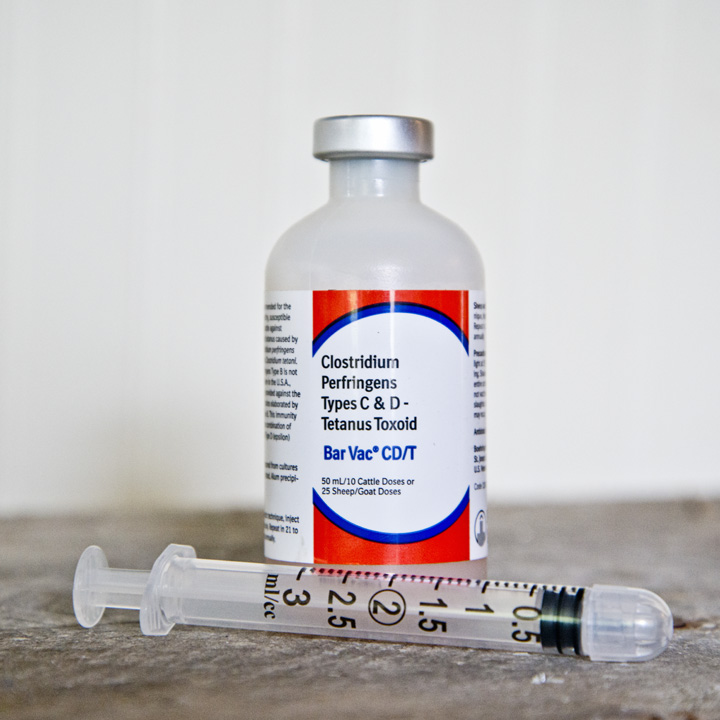
There are no where near as many vaccinations for goats as there are for children. The main vaccinations that our goats get are the CD-T, and rabies. Both prevent fatal illnesses. The importance of the rabies vaccination goes without saying, but you can read more about the CD-T vaccination here.
When it comes any other medication for our goats we use them as needed. So far we have never had to use antibiotics. We take great measures to make sure our herd is healthy so we can continue to avoid them. We deworm the girls twice a year, once before they are bred to make sure they are in the best condition possible at the time of breeding, then again right after they kid because they are very susceptible to parasites at that time. During the rest of the year we only deworm if it is absolutely necessary.
Finally comes the need for milk withdrawal. We never ever use milk from animals that have just been medicated. We often double the manufacturer’s suggested withdrawal time (meaning we dump the milk after the milking) because it is incredibly important to us that our milk is safe. Like I have said before, we give this milk to our children and use it in all of our products. We feel a great responsibility to make sure our milk is safe and comes from healthy animals.
Goats are social animals and should never be kept alone. A single goat will become depressed and will be far more vocal. So, it’s incredibly important to their heath that they have a companion. Most farms, included us, will not allow you to purchase a single goat unless you already have a companion animal set up, preferably another goat. Goats can also be put in with other social farm animals like llamas, alpacas, donkeys, or horses.
I have had several people tell me that they have heard that a dog can be kept with a goat as a companion… there are several issues with this. People have a tendency to bring dogs inside and a goat’s companion should never be taken away from them. You would have to be ok with leaving the dog with the goat at all times. The other issue is that there are only a few breeds of dogs that are recommended to be with goats. Great Pyrenees is the breed that is most commonly used as a guard dog for goats. It’s important that any dog with a goat have a guard mentality and not a herding mentality. Herders can become more aggressive with goats, especially when they don’t do what the dogs what them to do. Goats are not herding animals and will fight being led. It wouldn’t take much for a dog to kill a goat. So if someone wants to use a dog as a companion for a goat it’s going to require finding the right dog, with the right personality, lots of training, and a wiliness to leave the dog out with the goat at all times… Quite frankly a livestock animal would be easier and more cost effective.
I have had so much fun looking back at these pictures each month. It’s amazing to go back and see what we have accomplished in such a short amount of time. It gives you a new perspective. I can’t believe how quickly things have come together in the last month, especially with the garden… Thinking back it sure doesn’t feel that way, but looking at the photographs there is visual evidence that we sure have accomplished a lot!
To follow our 365 project “A Photo a day from The Freckled Farm” follow us on Instagram: Thefreckledfarm

Today is a goat fact that we get asked about often… Disbudding.
Disbudding is when a baby goat’s horn buds are burned off to prevent them from growing a full set of horns. Kids are generally disbudded within the first week of their life. This may sound cruel, but it is important to the goat’s health, as well as the health of it’s herd mates and caretakers. Goats with horns will run into many problems. They can easily get stuck in fencing, which can strangle them or leave them open to predators. They can also hurt or even kill their herd mates or caretaker. It is quite dangerous to have a goat with horns around (I have heard many stories). Especially on dairy goat farms where goats are handled so much on a daily basis.
Our farm vet disbuds our kids for us. This was not a procedure that I wanted to do on my own. She does it under anesthesia. The goats wake up about 30 minutes after the procedure acting totally normal. I have never had a problem with the goats acting like they were in pain or even phased by being disbudded.
So while this isn’t a procedure that we look forward to it’s important to the health of our herd that it is done.
Fias Co Farm has done an amazing job explaining the importance of disbudding – Check out THIS article.
Every single ingredient that goes into our Goat Milk Soap is carefully chosen for the highest quality and best result for our customers and our environment. That process all starts with our goats. What we feed our goats is incredibly important. It not only affects the health of the goat but the quality of the milk that we feed our children and use in our products. So when it came to what we were going to feed them, I did a great deal of research.
Our pasture, and the forage throughout it, is the most important part of our goats’ diets. Goats are foragers, not grazers. They need the roughage and they like to eat foliage that is off the ground. During the spring, summer, and most of the fall our pasture provides the goats most of their sustenance. They have pine trees, blackberry brambles, honeysuckle, and more.
Hay is the next largest portion of our goats’ diets, especially during the winter when there is not a lot of forage and essentially no grass to eat. So our hay is not something we skimp on. The hay we purchase is chemical free, although as a small farm they do not have an organic certification. The bales are kept out of the weather and have never been rained on, which is extremely important. Being in the weather destroys the nutrients of the hay and encourages the growth of mold, which can be deadly. Our goats maintain weight on a lot less since the quality of the hay is so high. Good hay goes a long way.
At first we were feeding our girls grain from a large corporate feed company. It was fine, but I knew we could do better. They didn’t have an organic or non-gmo product and I like to support local farms whenever possible. We have a local feed company that offers organic feed, but the price per 50# bag was nearly double what we were spending and that just wasn’t in the budget. Years ago, a farmer friend of ours turned us on to Sunrise Farms Feed. They offer all-natural non-gmo feed. The grain for their feed comes from small local farms. It looks and smells amazing. It’s not over processed, you can actually see all the individual ingredients. The quality is outstanding and it made a difference you could actually see! Their coats which were already healthy and beautiful looking became even more so. Our girls have such wonderful energy. I attribute at least some of that to the grain.
Grain is fed to the goats on the milk stand while they are being milked. This helps them with their milk production and keeps them occupied while we work with them. Our goats who are not in milk, the ones who are too young or the bucks, only get a very small amount of grain. It’s just enough to keep them “friendly,” as our vet would say.
Black oil sunflower seeds (BOSS) have many benefits for goats. Many goat farmers use BOSS as a supplement since the seeds are rich in fiber and protein. BOSS is also said to improve milk production and increase butterfat. It also helps improve their coat. We mix a small handful of BOSS in with everyone’s grain at feeding time.
Loose minerals round off our goats diets. It provides them with things that our soil/plants might be lacking, like copper and selenium (this is a very selenium deficient area) as well as salt.
We will continue to do whatever we can to provide our animals with the best feed possible. We want our animals to be healthy and the milk we use to be high quality!
Try out our Goat’s Milk Soap to see the end result of this healthy diet.
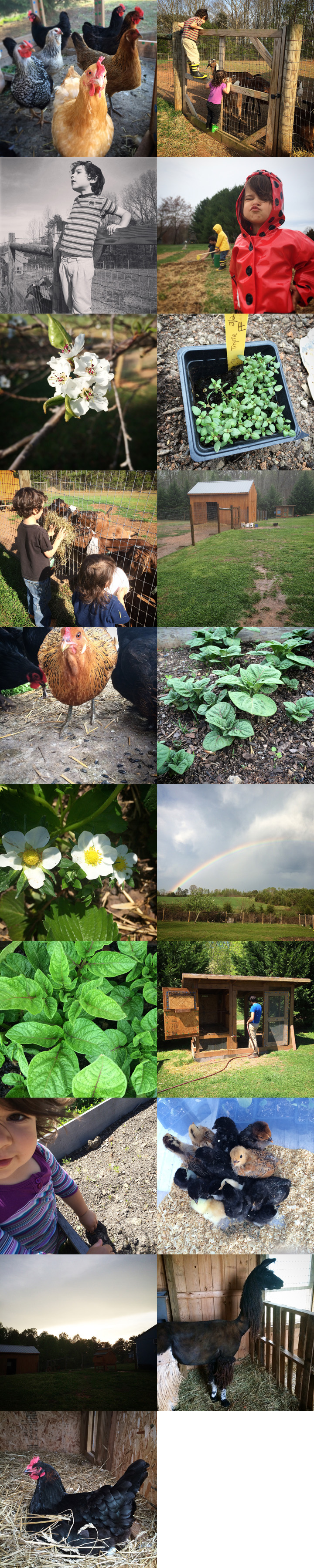
So, I am getting these posted a little late this month. What can I say… It’s the start of the busy season. Here are the “other” pictures (the photographs that weren’t the “picture of the day” from our 365 project, but were still posted to our Instagram during the month of April). To follow the images from the farm in real time follow us on Instagram @Thefreckledfarm
The first round of 2015 kids will be ready to go to new homes in the coming weeks. Any goats that are available for sale can be found here. If you are interested in coming to see our available kids or purchasing a goat please feel free to contact us.
Goat Pricing:
All goats come with papers and can be registered through the ADGA. Our American Does are phenomenal milkers. Our Pure Bred Does come from outstanding milking lines, but are first fresheners, so we can not speak to their milking habits as of yet, however they are currently producing well above average. Ruth is giving us over a gallon a day, and Sonia is giving us about 3/4 of a gallon…. both as first fresheners.
If you do not already have a goat or at the very least another companion farm animal like a donkey, horse, llama, or alpaca we require that you purchase two goats. This can be two does, a doe and a wether (a castrated male), or two bucks. Goats are social animals and do not do well alone.
The kids will have received one dose of BoSe, both doses of CDT, and a coccidiosis and worm prevention treatment. The kids will also be disbudded their first week of life and tattooed before pick up. We send all kids home with a week of feed. If you do not plan to use the same feed that we do (Sunrise Farms Goat Feed) this should be enough to help you transition them to their new feed. We will also give all purchasers a list of suggested suppliers and suggestions of how to care for their kids the first few months in their new home.
For today’s Fun Farm Fact we are going to talk goat population statistics. There are 500 million goats in the world! A very large percentage of the world’s goat population is in developing countries. 170 million of them reside in China. 3 million, only a small fraction of the world’s population of goats, live in the United States, with Texas leading production. The largest importer of goats is the US, while the largest exporter is Australia. I’m thinking we need more goat farms in the US!
Where did April go? This year is FLYING! We have been staying so busy and it’s all going by in a flash. This week really kicks off market season for us. Four of our five markets are open as of this week and the fifth opens next week. Today is our first time at the Wednesday Aw Shucks Market! In fact, three of the markets we are doing this spring/summer are completely new to us. We are so excited to bring our goat milk soaps to new customers throughout Central VA.
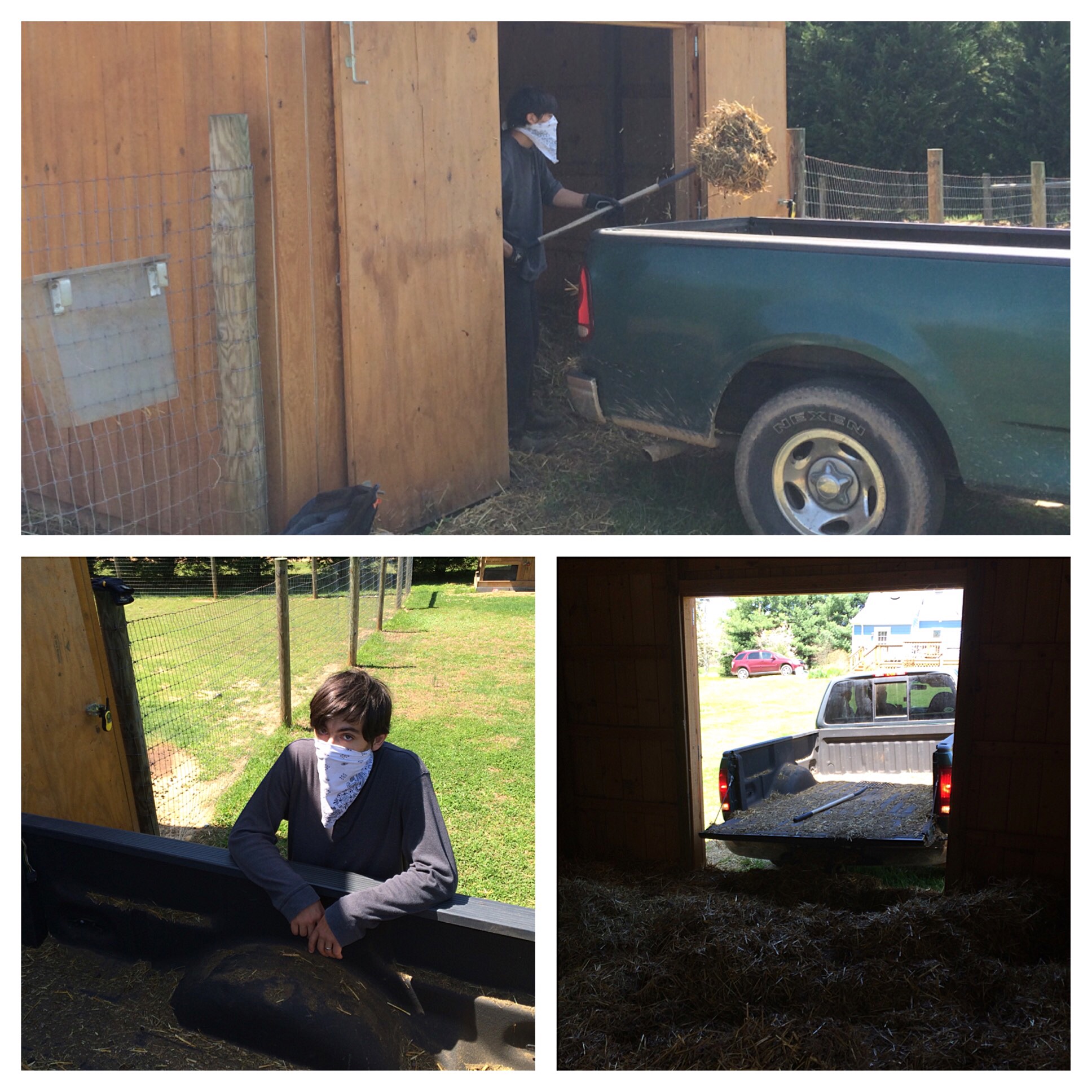
This past week hasn’t exactly been an easy one… for several reasons. This week was the big spring cleaning of the farm buildings. During the winter we deep bed, which helps create heat that keeps the barns and coop warm during the winter. When the spring comes along, and the nights are consistently over 45/50 degrees, we have to muck (clean) out the deep bedding. Which is NOT fun! The barn in particular. The bedding in the barn is several feet deep. The top few layers are mostly clean (which is how you manage deep bedding… it’s important that the layer the animals are laying on is clean), but the layers below, especially the bottom layer are rough. Most years cleaning out the deep bed takes maybe five or six hours with one of us doing the job… this year however it took us nine hours!! NINE HOURS!! And there were two of us working. Why the big jump? Well, the three additional goats played a part… thats the urine of three more animals soaked up in that bottom layer. It was awful! There were also more pregnant goats this year than last… again more urine. They were also stuck in the barn more this winter with all the snow that stuck around for so long. The chicken coop and buck barn weren’t as bad, time wise at least. It’s a necessary chore, but one we dread all year. From now until mid-November, when we start deep bedding again, the barns and coop will be mucked on a very regular basis and these cleanings are much easier and go much quicker!
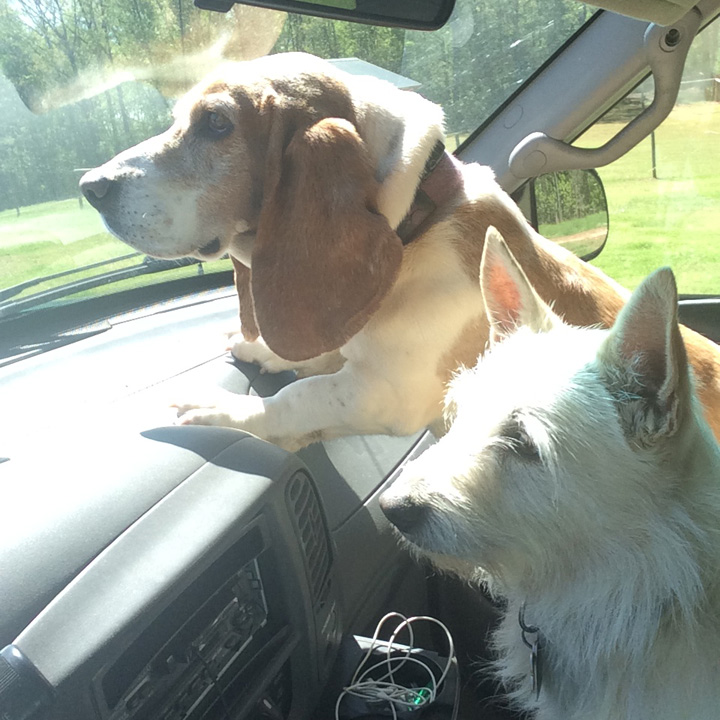
This week was also difficult because our dogs went missing for two days. Annabelle, our bassett, has become a runner. She hasn’t always been this way. She is eight years old and only in the last year has she started trying to escape every chance she got. We have done whatever we could to contain her but nothing works. Occasionally she has gotten out and gone running, but the longest she has ever been out was four or five hours. She won’t go far unless our other dog, Frankie, is with her and Frankie won’t run at all unless under her influence. This time they got out together around 3pm when we went out to do afternoon farm chores. When we finished farm chores and were coming back inside around 7:30pm they we still gone. We spent the entire night calling them from the back porch. They were gone the entire next day. I posted their information on every Facebook pet group in the area and called animal control. Kevin drove around looking for them and we took turns calling them from the porch the entire day. We went to bed that night still not knowing were they were. I had a meeting the next morning and needed to run errands, so I was away from the house. That afternoon, when on my way home, Kevin called to say our neighbor saw them about four miles up the street in a church parking lot. I went home to get the truck and went searching for them… and there they were, lounging in the shade by the church. They were covered in ticks, but were perfect fine otherwise! After two days I had lost hope in finding them. I am so happy to have them home… now to keep them from escaping again!
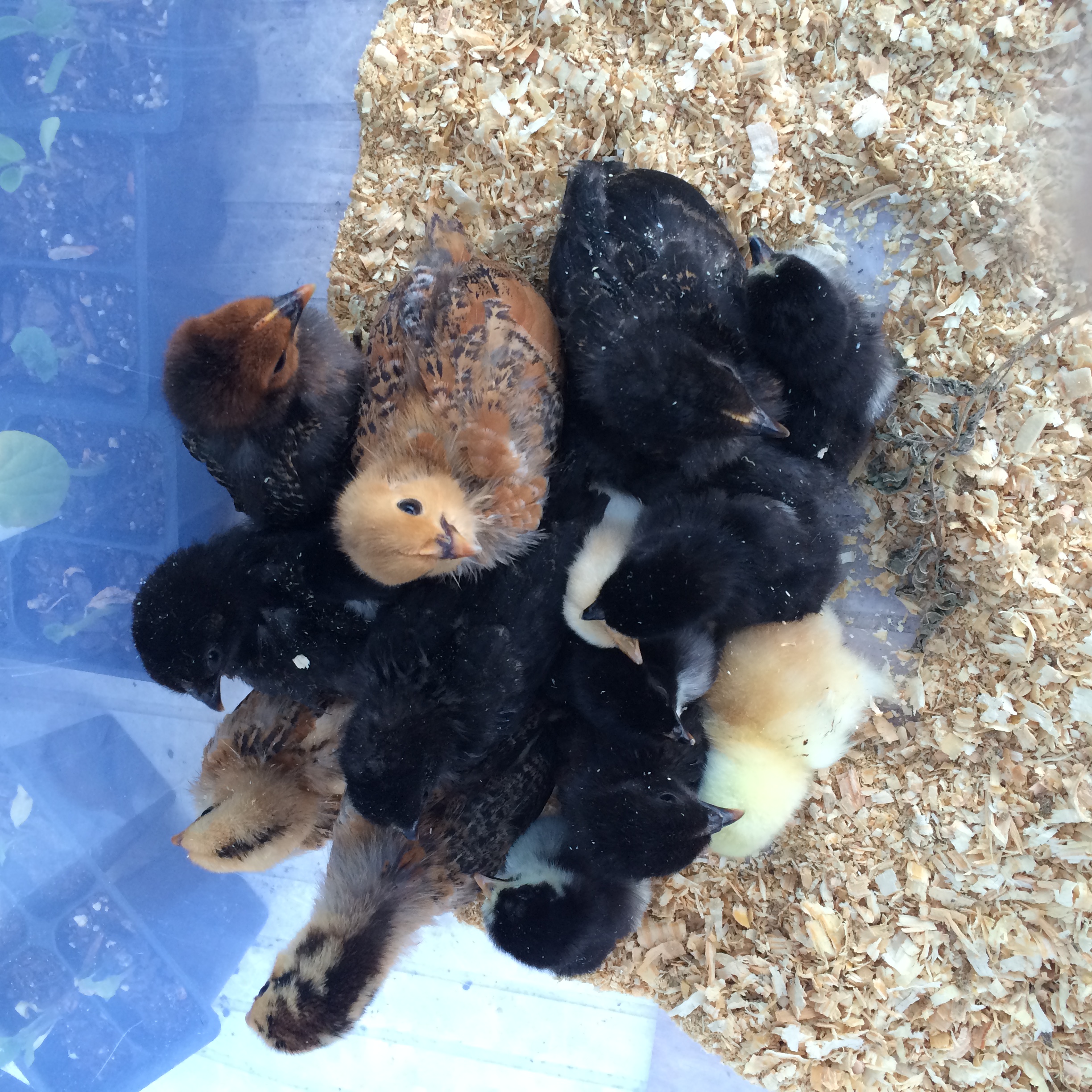
This week wasn’t all bad though! In fact, aside from those things it was actually a good week. A friend of ours, from Chickenberry Farm, brought us bantam chicks! Chicks have so much personality and it is so much fun to watch them grow! These little chickens will live in a chicken tractor in our garden and will help us control the pest. A few of the roosters will live in the pastures with the goats and in our yard as free rangers to help control pest in those locations as well.