Tag: goat

  • Fun Farm Facts Friday – December 25th

    This is it! The very last fun farm fact! It has been an amazing year! I hope that you enjoyed this series and learned a lot.

    Abraham Lincoln’s sons had two goats that lived in the white house with them! Forget the “first dog”… The “first goat” sounds a whole lot better to me!

  • Fun Farm Facts Friday – December 18th

    After this week there is only one more fact!!

    There is over 210 different breeds of goat in the world!! Only a small fraction of these breeds are in the United States. In fact, there are only 8 common dairy goat breeds here in the US.

  • Helping Farm Animals Deal with the Cold

    It’s almost officially winter. It won’t be long before we are dealing with extremely cold temperatures!
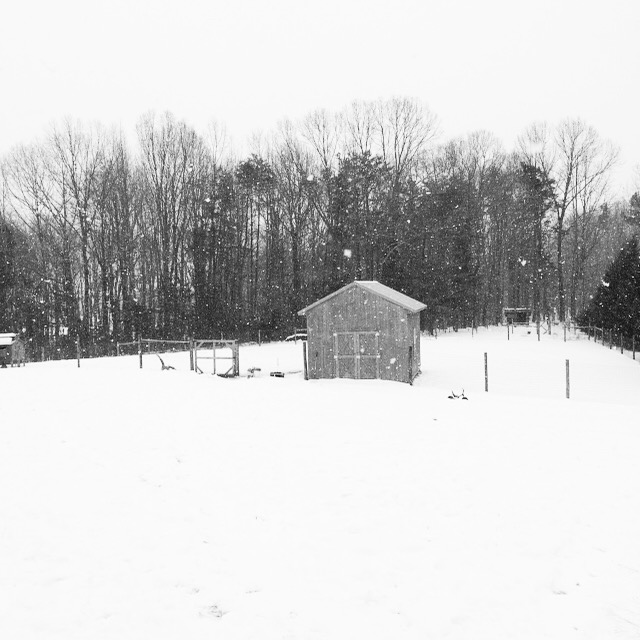
    Helping Animals Deal with the Cold - The Freckled Farm

    Most farm animals are built to deal with the cold to some degree. They have thick skin and a thick coats, but when tempatures drop well below freezing, like they did last winter, they may need a little help. Below I have outlined some ways we help our animals stay warm and healthy even when the temperatures reach frigid levels!

    1. We deep bed both our barn and chicken coop. When the temperatures start to drop late fall we do one last deep clean of the barn and chicken coop, then start a very thick layer of straw. It is imperative that you make sure you get good quality straw that has never gotten wet. You do not want your straw molding. On a daily basis (for the barn at least) we clean up any manure and extremely soiled straw then add a clean layer of straw. Most of the poop falls through the straw to the bottom of the bed (with the exception of the llama poop since they poop in one spot and it starts to build up), where it begins to compost and generate heat. The heat from the composting matter heats the barn and keeps it (in our case at least) significantly warmer than the outside air.
    2. When building our goat shelter we opted for a true barn as opposed to a lean-to like so many do for their goats. We wanted the option to completely close up the shelter if need be. If we are expecting extremely cold temps we can close the barn door, trapping in the heat from the deep bedding and their body heat. It’s also extremely helpful when you are kidding when it is still cold!
    3. One of the big challenges of winter is keeping fresh water available. In freezing temperatures the water buckets freeze in no time. We haven’t gone as far as to heat our buckets yet, although I feel that time is coming as our herd grows… We just check them often, either dumping out the ice and adding fresh water or adding warm water to thaw the ice.
    4. Finally we increase their feed. In the winter we more than quadruple the hay rations for the animals. They do not have grass or forage to eat (when it snows they won’t even leave the barn) and we want them to maintain weight, if not put a little more on, to help pad them for winter.

    While most animals can deal with cold temperatures without much issue, following the few steps outlined above you can help them get through the harshest points of winter.
  • Fun Farm Facts Friday – December 11th

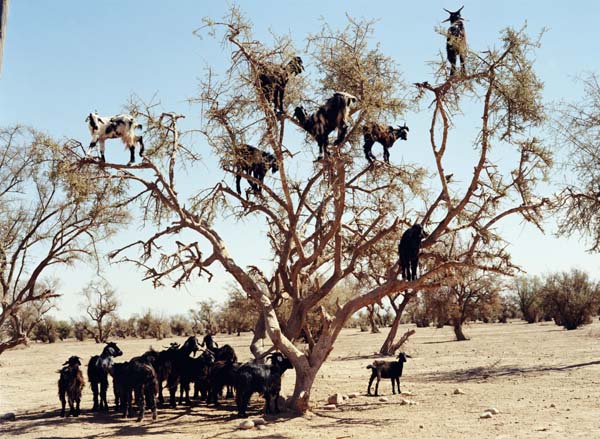
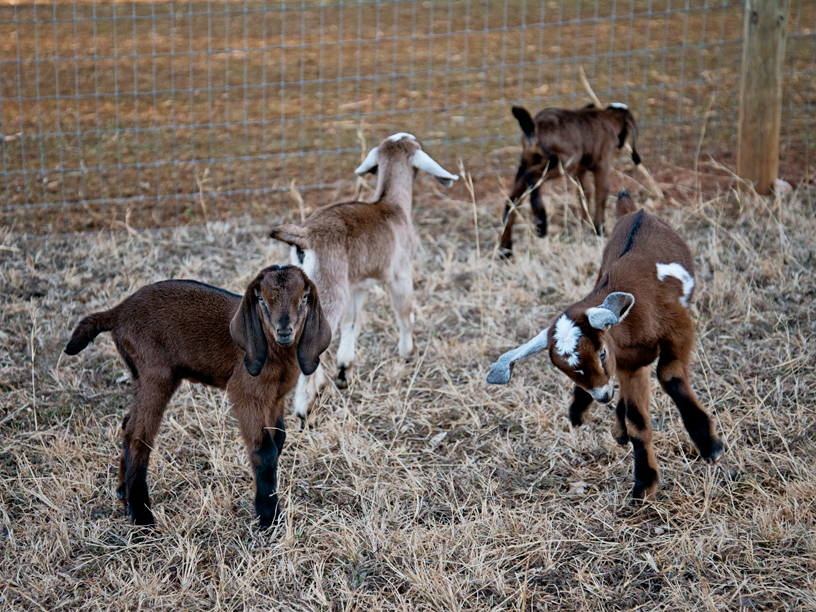
    Goats have excellent coordination. In certain parts of the world you can see goats scaling mountains and climbing trees. Goats love to climb! Many farmers will put ramps and toys in their pastures so goats can play.

    goat-treesPhoto Credit: Viralnova 


  • Fun Farm Facts Friday – December 4th

    I can’t believe it’s December! We have almost reached the end of our Fun Farm Facts. Only 4 more facts before the series is over! I hope you feel like you have learned a lot over the year.

    The average milk production for a dairy goat is 1,500 pounds per year in the goat’s prime! This can vary widely based on the individual goats and breed. Small breed goats like Nigerian Dwarfs give signification less, while some of the standard breed goats, like Toggenburgs, give more. On average Nubians gives over a gallon day. Our girls have always been exceptional milkers!

  • Fun Farm Facts Friday – November 27th

    Today’s farm fact is about goat udders!

    Goats have two teats (nipples). However, occasionally a goat will be born with an additional teat! Goat udders consist of two separate halves, each with their own mammary gland. When milking each side must be milked all the way out.

  • What to ask when purchasing a goat

    If you haven’t already, now is the time of year to reserve your 2016 kids. Early reservation places you higher on the list and gives you the first pick once kids become available. We still have reservations available. Please feel free to email us if you are interested.

    The Freckled Farm Soap Company - Goat

    In the meantime, as you are planning for your new additions to your herd, I have compiled a list of questions to ask your breeder when purchasing a goat.

    1. At what age do they allow goat kids to leave their farm and go to their new homes? Generally this is will be between 8-12 weeks. I personally would not trust a breeder that would allow a goat to be sold earlier than 8 weeks. Knowing the timeline will help you plan, so you will be able to have everything together for your new goat before he/she arrives.
    2. What vaccinations will he/she have received at the time of pick-up? Some farms do not vaccinate kids, while others do. It is good to know what you may need to do, vaccination wise, once you get your new goat back to your farm.
    3. When was the last time the goat was dewormed and what were they dewormed with? It is suggested that you deworm a goat within the first week of having them on your farm (we have always done it between 5-7 days) because they are being exposed to a bunch of new parasites at once, even if you have never had goats on the property. I have heard several stories from other breeder friends of ours where people have taken a goat kid home, never dewormed them, and they died within a few weeks. If your breeder dewormed the goat soon before pick up you are going to want to wait until a safe period has passed before you deworm them again.
    4. Will the goat kid be disbudded? We only have disbudded goats on our farm. I wrote a blog post about it here.
    5. Have the goats been tested for things like CAE and have any of the goats tested positive. Our farm vet does a round a blood tests on all of our goats every year. This way people can purchase goats from us with confidence. Be wary of a farm where the goats have not been tested. Do not blindly trust people simply because they have been keeping goats for a long time. I have heard too many stories of people who ended up with diseased goats because the farmer had been keeping goats for decades and they assumed that they would be aware if there was an issue within their herd.
    6. Ask about the milk production of their does. How much milk have they given in the past? How does the milk taste (ask to taste if possible)?
    7. Are the goats registered? If you plan to show or breed you will want to purchase registered animals.
    8. Have there been any health issues within the herd or has a goat died of an unknown disease within the last few years? People can easily lie, so finding a farmer you trust is key. If they have had a heath problem it’s imperative to know in case it is something that can come back and effect the rest of your herd.
    9. What is their feeding regiment? If they use a different feed than you, you will need to purchase some of the feed that they are used to so you can slowly wean them off of it and onto the their new feed.
    10. Has there been a history of abortions in their herd? 
    11. Are the kids bottle raised? We have bottle raised babies on our farm. In fact, I am not aware of a dairy goat farm in this area that doesn’t bottle feed.
    12. If you are purchasing an older goat… Why is the goat for sale? You may be inheriting someone else’s problem. They could be selling the goat because they don’t throw ideal kids or produce enough milk, or maybe because they have had health issues. On the other hand they could be selling in order to reduce their herd to a more manageable size. Make sure you ask!

    Inspect the goats before you take them home. Check that their eyes are clear and the eyelids are within the acceptable red/pink range. Check to make sure their hooves are in good shape and there isn’t any hoof rot present. Make sure their coat looks healthy and shiny.

    Some more Dos and Don’ts

    • Do visit the farm where your goats are coming from.
    • Do shop around
    • Don’t buy just one goat. You need at least two.
    • Don’t purchase your breeding stock from auctions
    • Do quarantine your new goats from the rest of your herd.
  • Fun Farm Facts Friday – October 30th

    Have you ever heard people talking about farm animals and been confused about the terminology they were using? With this week’s farm fact I’m here to help! Below you will find several terms used when describing the farm animals that we have. These are terms that you might see pop up from time to time on our blog.

    Goats:

    • Kid – Baby goat
    • Doe – Female goat
    • Doeling – A young female goat, generally under a year
    • Buck – Male goat
    • Buckling – Baby male goat, generally under a year
    • Wether – Castrated male
    • Billy – Older intact male
    • Dam – Mother goat
    • Sire – Father goat

    Chickens:

    • Chick – Baby chicken
    • Pullet – Female chicken until they are old enough to lay eggs
    • Hen – Female chicken of laying age
    • Rooster – Male chicken (also called cock or cockerel)

    Llamas:

    • Cria – Baby llama
    • Maiden – Female llama who has not been bred yet
    • Yearling – One year old llama
    • Dam – Mother goat
    • Sire – Father goat
  • Fun Farm Facts Friday October 9th

    Have you ever been on a goat farm during breeding season? If so, then you are familiar with the smell of a buck in rut… It’s a unique and distinct smell.

    During breeding season the male goats (bucks) go into rut. During this period the buck’s hormones are surging. They tend to act more aggressively and will eat very little if at all. In order to “attract” the does to them they will urinate all over themselves giving them a pungent odor. The girls love it, but let me tell you, it’s quite gross and it can be smelled from quite a distance. Being that it is breeding season here on the farm we are dealing with it right now!

  • Fun Farm Facts Friday October 2nd

    When you hear facts about when to breed goats you will likely get different answers from different farmers. Some farms like to breed their goats right when they reach sexual maturity, while others, like us, like to wait until they are 18 months old. The general rule of thumb is not to breed before 7 months and 77 pounds. This is the baseline for when it is safe to breed. Breeding a goat any smaller than this could cause serious complications for the dam. Some farmers decide to breed their goats right when they reach this size and age limit… and they have success doing it. However there are a few downsides to doing this. Some say that it stunts the goat’s growth. The farmers who breed early will insist this isn’t true, while others claim they have seen it first hand. I’m not sure there is any scientific proof to this. The reason most wait to breed is that it allows the goat to get some size on her and reduces the likelihood of potential compilations during kidding.