Category: Farming

  • How we spend our off season…

    The idea of an off season is a bit of a joke at this point. There really isn’t a time of the year where things slow down for us. During the “busy” season Kevin and I work from the moment we wake up, until our heads hit the pillow around midnight. Kevin gets up before the sun rises to do the morning farm chores and when he gets in we all have breakfast together before starting our day. We hurry around making and packaging our goat milk soap, preparing for farmer’s markets and/or craft shows, returning emails and calls, writing blog posts, handling all of the different social media outlets, and of course running the farm. The farm itself is practically a full time job all it’s own. Between that soap business and photography business we easily work 90+ hours a week… each. We are literally working in some form or fashion all day long, seven days a week. We love what we do, so (most of the time) it doesn’t feel like work and we are able to be flexible when it comes to how our day is run. Then December comes to an end we are thrown into this strange “off season” where we only have one (potentially two) markets a week. We only have a handful of online orders come in a week. Weddings and portrait sessions are few and far between. You would think we could maybe sit back and relax now…
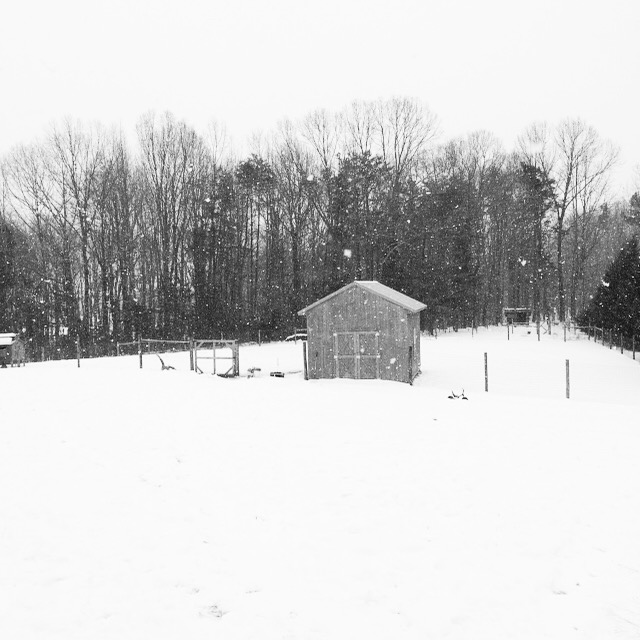
    The Freckled Farm Winter

    This time of year we only end up working around 60 hours a week each. Most of our farm chores are year round, so there really isn’t a big decrease in time there. While we don’t have to work in the garden or mow the lawn, most of the animal chores remain the same. We receive a small two month break from milking towards the end of the girls’ pregnancies, but they still eat on the milk stands, so instead of actively working during their feed time I usually spend that time talking to them and watching their baby bellies bounce around.

    This time of year our days are spent working on the projects that we had been putting off during the busy season. This includes doing repairs to the farm structures, preparing for babies, and finally getting to some of the farm projects that we wanted to do.

    When it comes to the soap company we spend the day/evening making batches of our goat milk soap, rebuilding our stock after being depleted during the holiday. This year we plan to (hope to) go into May, when markets open and business really starts to pick back up, with nearly three times more than what we had going into the start of the busy season last year. We also are using this time to work on several new soaps and even some entirely new products! We plan to go into the busy season running!

    Organization is the key this time of year. During the busy season things get tossed around. The shipping station looks like a storm blew through it. Everything in the office is scattered about. Each year we try to prefect our organization strategy a little more, to make things easier on ourselves the rest of the year, but as the business grows we are constantly having to reassess. We have put a lot of thought and effort into the new system that we are implementing this year, hopefully it will make things go smoothly once we hit May.

    We do try to give ourselves a little bit of a break during the winter though. We generally give ourselves the day “off” on Saturdays after the markets are over. This doesn’t mean we get to spend the whole afternoon and evening relaxing, because that is just not possible on a farm, but it does mean that computers stay off. Also, instead of working until midnight every other night we usually call it day between 8-10pm. I would love to be able to stop working earlier, but so much of the morning is dedicated to homeschool activities and using the little bit of the winter daylight to get things done around the farm. The “inside” work often gets pushed back to when it is dark.

    Come the end of March we will have babies all over the place and that’s a busy season all it own. We have seven goats due to kid and we should be getting fourteen to twenty one kids from them, all of whom will be bottle fed for 8 weeks. We have baby chicks coming to us via USPS around the same time. We will hopefully have piglets sometime in April (although we can not confirm if Myrtle is pregnant yet). Let’s not forget the garden! During all of this the 2016 garden will be going in! New life will be everywhere. It’s a really wonderful time of year to be on a farm.

    It’s a busy life, but we love it (so much!), and are incredibly grateful that we get to work side by side and spend our days together.
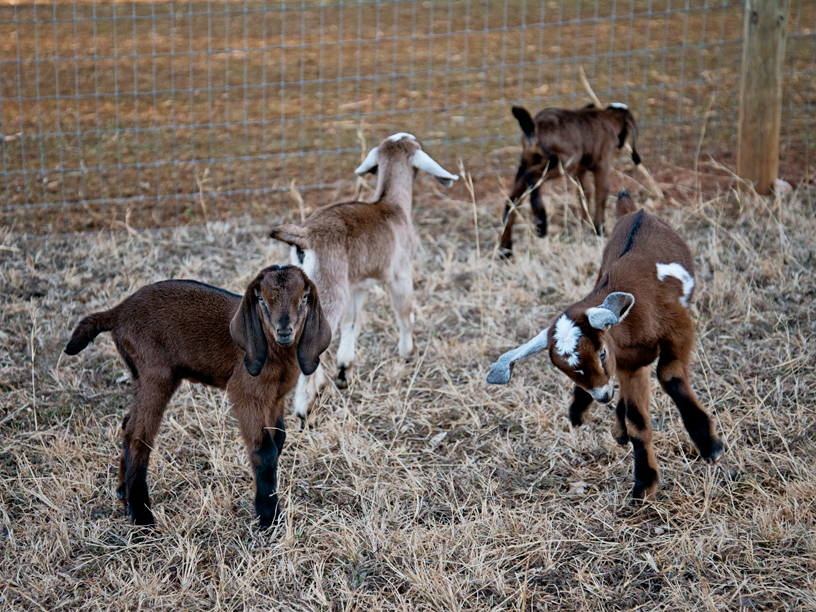
  • Helping Farm Animals Deal with the Cold

    It’s almost officially winter. It won’t be long before we are dealing with extremely cold temperatures!

    Helping Animals Deal with the Cold - The Freckled Farm

    Most farm animals are built to deal with the cold to some degree. They have thick skin and a thick coats, but when tempatures drop well below freezing, like they did last winter, they may need a little help. Below I have outlined some ways we help our animals stay warm and healthy even when the temperatures reach frigid levels!

    1. We deep bed both our barn and chicken coop. When the temperatures start to drop late fall we do one last deep clean of the barn and chicken coop, then start a very thick layer of straw. It is imperative that you make sure you get good quality straw that has never gotten wet. You do not want your straw molding. On a daily basis (for the barn at least) we clean up any manure and extremely soiled straw then add a clean layer of straw. Most of the poop falls through the straw to the bottom of the bed (with the exception of the llama poop since they poop in one spot and it starts to build up), where it begins to compost and generate heat. The heat from the composting matter heats the barn and keeps it (in our case at least) significantly warmer than the outside air.
    2. When building our goat shelter we opted for a true barn as opposed to a lean-to like so many do for their goats. We wanted the option to completely close up the shelter if need be. If we are expecting extremely cold temps we can close the barn door, trapping in the heat from the deep bedding and their body heat. It’s also extremely helpful when you are kidding when it is still cold!
    3. One of the big challenges of winter is keeping fresh water available. In freezing temperatures the water buckets freeze in no time. We haven’t gone as far as to heat our buckets yet, although I feel that time is coming as our herd grows… We just check them often, either dumping out the ice and adding fresh water or adding warm water to thaw the ice.
    4. Finally we increase their feed. In the winter we more than quadruple the hay rations for the animals. They do not have grass or forage to eat (when it snows they won’t even leave the barn) and we want them to maintain weight, if not put a little more on, to help pad them for winter.

    While most animals can deal with cold temperatures without much issue, following the few steps outlined above you can help them get through the harshest points of winter.

  • What to ask when purchasing a goat

    If you haven’t already, now is the time of year to reserve your 2016 kids. Early reservation places you higher on the list and gives you the first pick once kids become available. We still have reservations available. Please feel free to email us if you are interested.

    The Freckled Farm Soap Company - Goat

    In the meantime, as you are planning for your new additions to your herd, I have compiled a list of questions to ask your breeder when purchasing a goat.

    1. At what age do they allow goat kids to leave their farm and go to their new homes? Generally this is will be between 8-12 weeks. I personally would not trust a breeder that would allow a goat to be sold earlier than 8 weeks. Knowing the timeline will help you plan, so you will be able to have everything together for your new goat before he/she arrives.
    2. What vaccinations will he/she have received at the time of pick-up? Some farms do not vaccinate kids, while others do. It is good to know what you may need to do, vaccination wise, once you get your new goat back to your farm.
    3. When was the last time the goat was dewormed and what were they dewormed with? It is suggested that you deworm a goat within the first week of having them on your farm (we have always done it between 5-7 days) because they are being exposed to a bunch of new parasites at once, even if you have never had goats on the property. I have heard several stories from other breeder friends of ours where people have taken a goat kid home, never dewormed them, and they died within a few weeks. If your breeder dewormed the goat soon before pick up you are going to want to wait until a safe period has passed before you deworm them again.
    4. Will the goat kid be disbudded? We only have disbudded goats on our farm. I wrote a blog post about it here.
    5. Have the goats been tested for things like CAE and have any of the goats tested positive. Our farm vet does a round a blood tests on all of our goats every year. This way people can purchase goats from us with confidence. Be wary of a farm where the goats have not been tested. Do not blindly trust people simply because they have been keeping goats for a long time. I have heard too many stories of people who ended up with diseased goats because the farmer had been keeping goats for decades and they assumed that they would be aware if there was an issue within their herd.
    6. Ask about the milk production of their does. How much milk have they given in the past? How does the milk taste (ask to taste if possible)?
    7. Are the goats registered? If you plan to show or breed you will want to purchase registered animals.
    8. Have there been any health issues within the herd or has a goat died of an unknown disease within the last few years? People can easily lie, so finding a farmer you trust is key. If they have had a heath problem it’s imperative to know in case it is something that can come back and effect the rest of your herd.
    9. What is their feeding regiment? If they use a different feed than you, you will need to purchase some of the feed that they are used to so you can slowly wean them off of it and onto the their new feed.
    10. Has there been a history of abortions in their herd? 
    11. Are the kids bottle raised? We have bottle raised babies on our farm. In fact, I am not aware of a dairy goat farm in this area that doesn’t bottle feed.
    12. If you are purchasing an older goat… Why is the goat for sale? You may be inheriting someone else’s problem. They could be selling the goat because they don’t throw ideal kids or produce enough milk, or maybe because they have had health issues. On the other hand they could be selling in order to reduce their herd to a more manageable size. Make sure you ask!

    Inspect the goats before you take them home. Check that their eyes are clear and the eyelids are within the acceptable red/pink range. Check to make sure their hooves are in good shape and there isn’t any hoof rot present. Make sure their coat looks healthy and shiny.

    Some more Dos and Don’ts

    • Do visit the farm where your goats are coming from.
    • Do shop around
    • Don’t buy just one goat. You need at least two.
    • Don’t purchase your breeding stock from auctions
    • Do quarantine your new goats from the rest of your herd.
  • How the rest of our animals eat

    Back in May I wrote a post about what we feed our goats (here). Since the products that come off of our farm come from the milk that our goats supply we felt that it was important that our customers have an insight to the quality of our milk. The health of our animals is #1 to us so I thought our readers might also be interested in how the rest of the animals on The Freckled Farm are fed.

    Llamas

    Our llamas are strictly grass fed. They spend their days eating grass from the two pastures, munching on blackberry brambles and evergreen trees, and eating mountains of hay. During the winter we are literally stuffing the hay feeders all day. Because we do not give our llamas grain the quality of the hay is incredibly important. It is what keeps the weight on them, so the hay has to be nutrient rich. I have talked about the quality of our hay before. It’s something that we take very seriously. Most farmers that grow hay are small and only produce it for a small number of farms, so they do not want to go through the process and cost to be certified organic. The hay we use, however, is as close to organic as we can get! It’s chemical free and the farmer never uses drying agents. Good quality hay is one of the most important (and largest) purchases we make each year for our farm.

    Chickens

    Chickens eat everything. I’ve said it time and time again… chickens are not vegetarians like many big name chicken farmers would like you to believe. We feed our chickens a wide diet filled with proteins, veggies and greens, and grains. Our Chickens get a non-gmo grain and whatever food scraps that come out of our kitchen or garden. Our chickens also pick up lots of greens and bugs while they free range around the farm. You can tell if your chicken is getting a balanced diet by the color of their yolk, and our girls have bright orange yolks. I wrote an article about that as well (here).

    On The Freckled Farm the health of our animals is incredibly important to us. We do everything we can to make sure all of our animals have a well-rounded, nutrient-rich diet.

  • Stop worrying about labels… Get to know your farmer!

    I love organic. Most of the food we purchase from the store is organic, but when it comes to purchasing locally you might not see the word “organic” as much as you would like. I strongly believe it’s important for us avoid ingesting chemicals unnecessarily and it’s incredibly important for the environment and beneficial bugs, but becoming certified to sell organic is very expensive to get into and then maintain, so for small farms, ones that aren’t producing on a very large scale, this might not be possible or economical and you can’t use the word “organic” unless you have been certified or sell under $5,000 worth of product a year. Does this mean that you should pass them up because they don’t have that “organic” label? Does this mean their product isn’t as good? Of course not!!

    In stores these labels are the only way farmers or producers can communicate with their customers, but with farmers markets we have the unique opportunity to speak directly to the farmers or producer. Our family basically lives at farmer’s markets. We sell at 5 a week through the busy season! We, ourselves are farmers, and we spend most of our time around other farmers, and I think one of the things I have learned the most from my experience is trusting and knowing your farmers is so much more important than a label. We have all become too reliant on a seal/word. When you buy locally you have the chance to interact directly with the person growing and making your food, your soap, your knitted items, etc. You can ask them about their practices. You can even visit their farm and see where their product is coming from! You can see how the animals are raised, you can see the condition of the gardens or fields, you can see where things are stored… There is transparency. Isn’t that what we are screaming for with our labels – no gmo, organic, free range, etc? We want to know about the farming practices. We want transparency.

    We are a small dairy goat farm. It would not make sense for us to go through the process of becoming organic at this point in time, but we run our farm as organically as possible. We do not use chemicals on our garden or pasture. We use natural fertilizers (compost and manure). Our feed comes from a small local farm who makes all natural non-GMO feed, our hay is chemical free. We use medications only when it is 100% necessary for the health of the animal and then we go through a longer than suggested milk withdrawal period. Our goats are spoiled and loved. We welcome customers to our farm (many of our customers know our goats by name) and love showing off our hard work. We talk about our processes and the materials that go into our soaps. We do whatever we can to provide the best product possible. When we are working directly with our customers that extra expense seems so unnecessary. Especially since that expense would just be passed on to those customers.

    We have many farm friends who are producing “organic” produce (organic in every way but not certified). They are on their hands and knees in the fields fighting bad bugs and doing what they can to attract good bugs. They know their soil and only use natural fertilizers. They work hard to give their customers healthy, chemical free produce.

    We have friends who raise meat animals that spend their days on pastures, in green grass, and under the sun. That eat non-gmo feeds. They also spoil their animals and love them. They also want to provide their customers with the best product they possibly can.

    Are any of these farmers “less than” because they don’t come with a label on their products? Are they not trustworthy? No… I believe the organic movement is incredibly important, its good for us as humans and our environment, but the local movement is what needs our focus. Transparency is important and transparency can be achieved without labels. Shop local… Know your farmer!

  • 2016 Kid Reservations

    It’s that time of year again! Breeding season will be starting very soon. Now is the time to make a reservation for a 2016 kid. We work on a first come first served bases. If you have a specific breeding you are interested in please indicate that when you make your reservation. You are welcome to come and visit the goats if you like.

    Because we have no way of knowing how many goats we will get and what genders they will be we take a limited number of reservations and under estimate what we think we will get based on past experience. This year we will take reservations for 6 does. There may be kids still available in the Spring once all reservations are filled. If you are interested in a kid and all reservations are filled you will be added to a wait list.

    All of our does this year will be bred to our herd sire Warner. We will have a mixture of Pure Bred Nubians and American Nubians. Pictures of all of your does can be found on the “Our Animals” section of the blog. For more information about purchasing a goat from us visit this blog post.

    2016 Breedings

    • Dam: Ruth – Pure Bred
    • Dam: Sonia – Pure Bred
    • Dam: Hillary – American
    • Dam: Tina – American
    • Dam: Chelsea – American
    • Dam: Eleanor – American
    • Dam: Elsie – American

    Goat Pricing:

    • Pure Bred Nubian Does – $250
    • American Nubian Does – $200
    • Pure Bred Nubian Bucks – $250
    • American Nubian Bucks – $150
  • Beating the Summer Heat

    I love the heat! I’m comfortable even on the hottest days of the year… The cold is what I have trouble with (if you were following us last winter you are well aware of this!). The animals however don’t deal with the summer as well as I do. We have to take certain precautions to make sure that they are safe and healthy even in the hottest temperatures.

    The goats deal with the heat the best. We just have to make sure they have constant fresh water and shade. During the hottest parts of the summer we may have to come out several times a day to make sure the water buckets are filled. A few summers ago, when we were dealing with extreme heat, I witnessed a bucket of water emptied in front of me between the llamas and goats. We have several buckets spread around. We always keep at least one in the barn and one in the pasture.

    The chickens will tell you when they are too hot. They pant and egg production may go down. In very extreme heat chickens may become listless, which is a sign that they could be in danger of heat stroke. We help our chickens deal with the heat by making sure they always have fresh water, occasionally we will add ice to the water to keep it cooler longer, we give them frozen fruit and veggies to eat, and give them fruits with high water content like watermelon. It is also important that chickens have shade and space to dust bathe since this can help them regulate their temperature.

    In the spring we shear both llamas to prepare them for the summer and like with the rest of the animals we make sure they always have fresh water and shade. Afton, our cream colored llama, does fairly well in the heat. He dust baths a lot, but is no where near as miserable as our black llama, Blue. Poor Blue struggles in the heat, so at least once a day, on the really hot days, we go out and hose Blue off. He loves to stand in the running water.

    Heat can be very harmful to animals. It is extremely important that you take measures to keep your animals safe in the heat. For most fresh water and shade is enough, but keep a close eye on them to make sure they don’t need further help.

  • How to get a dark egg yolk

    If you are a farmer or even just have a backyard chicken flock you understand the importance, and the satisfaction, of getting a dark egg yolk from your chicken! It’s an indication that your chickens are getting a healthy, nutrient rich diet. If your chicken has a healthy diet then they are transferring those nutrients to their eggs! Everyone benefits!

    There are three nutrients that factor into the egg yolk coloring – Proteins, xanthophylls, and omega-3 fatty acids. All of these nutrients can be found naturally and if you are able to pasture your chickens they will pick up everything they need nutritionally and their yolks will be bright orange on their own without any supplementing. If your chickens live in a coop and do not get a lot of yard time there are ways of supplementing these nutrients so you too can get the dark egg yolks!

    Proteins

    It always drives me crazy when I see “vegetarian feed” on chicken meat or eggs at the grocery store. Chickens are not vegetarians. They are omnivores. They love and need meat! Bugs, mealworms, frogs, lizards, and even rodents. Letting your chickens have run of a pasture should give them all the protein they need, since they will spend their day chasing and eating bugs. If you need to supplement you can give them dried mealworms, black oil sunflower seeds, cooked meats, and cooked eggs. It’s a daily ritual for us to give our chickens black oil sunflower seeds when we are putting them up for the night. It makes it easier to get them into the coop and gives them an extra shot of protein, especially during the winter when there aren’t a lot of bugs out.

    Xanthophylls

    Xanthophylls play a large role in getting you those dark egg yolks. They can be found in plants like leafy greens, broccoli, collards, kale, and brussels sprouts. In the winter when greens are not always readily available you may notice that the yolks become a paler. Giving your chicken your veggie scraps and/or growing extra greens for them in your garden will help supplement their diet. Dandelion greens are also a great source of xanthophylls. During the spring and summer I have the kids pick the dandelions out of the yard and throw them in the coop. The chickens love them!

    Omega-3 Fatty Acids

    If you are looking to supplement Omega-3 Fatty Acids flax seeds and sea kelp will give the chickens what they need.

    Making sure your chicken has a well rounded, nutrient rich diet is easy to do and will benefit everyone and once you start getting the dark orange yolks it’s hard to imagine eating eggs that don’t… It makes you an egg snob!

  • Keeping predators out of your fencing

    Here at The Freckled Farm we have a tendency to go a little overboard in our planning of new projects. One example of this is our fencing. Most farms we have been to or visited use a pretty standard field fence for their pastures and their pens and smaller areas meant to separate kids, etc, are frequently made from wood or cattle panels. While we were researching what type of fencing we were using we were concerned with two things, predators and escapees. Goats are notorious escape artists so we wanted to make sure they would stay IN our fence, and stay safe.

    We chose a 5’ no-climb horse fence. This pretty much guarantees that our goats are staying put. Of course we still have to be careful not to put anything they could climb close to the fence. So that takes care of one of our two things, now on to the predators.

    In our area we have several predators to worry about when it comes to our goats. Coyotes, Bears, and more commonly, wandering dogs, can all be dangerous to your herd. On top of that we recently learned there is a mountain lion nearby.

    With 5-foot fencing we have a good deterrent. It is a high-tensile fence with posts every 8-10 feet so it would also be pretty tough to push or pull down. This should stop most dogs. Bears are unlikely to be motivated enough to do much here, etc. A fence though is not enough to protect your herd. Coyotes especially can jump a 5-foot fence with ease. I’m sure a mountain lion could do the same, if not scale the posts. So the best thing the fence really does is keep the herd in place, and keep predators from casually wandering into a meal.

    Electric fencing in addition to a good high-tensile barrier fence can go a long way to stop any would be attackers. You want to make sure you have an electric wire low, to prevent digging, but also one high to prevent jumping over the fence.

    After your fencing is in place you should really have a good guard animal. A guard can not only warn the herd of danger, they can fight off an attacker. Many people use dogs to achieve this, we use llamas. They are highly territorial and have the added benefit of eating what the goats do, which saves us money.

    Ultimately the best defense is a good offense. Take the steps necessary not to attract predators to your area. Make sure your animals have a guard animal. Keep them from wandering with a good strong fence that they cannot climb. In the end you should have at least a two-stage system. Keep predators out, but if they get in make sure they meet up with an aggressive foe standing between them an a free meal.

  • Vaccinating Our Goats

    When it comes to vaccinating goats the debates are almost as heated as the debates about vaccinating human children… and my view about vaccinating our goats is the same as my view about vaccinating our children.

    Vaccinating our Goats

    This has always been something I have struggled with. I do not like the idea of putting chemicals into our goats. It feels unnatural and scary. The decision to vaccinate is not something that I have taken lightly and the amount of research that I have done is sickening. You can find horror stories for both sides of the argument. My final decision however was to vaccinate. Like with my children I do whatever I can to ensure our goats are healthy and that means making hard decisions. Yes, there are risks associated with some vaccines, and yes, there are risks associated with not vaccinating. It came down to one simple thought… If something went wrong because I vaccinated (side effect, etc) it would be truly awful but at least I was trying to do whatever I could to avoid something bad happening. If something went wrong because I didn’t vaccinate it would be so much worse and I could have very easily done something to avoid it. Losing a goat, who we love, to something that could have been very easily avoided would be unbearable.

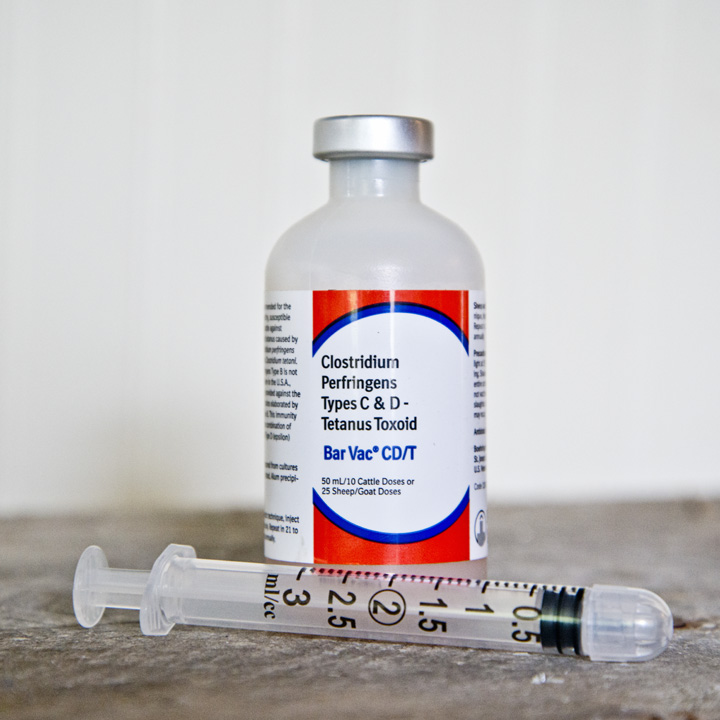
    There are no where near as many vaccinations for goats as there are for children. The main vaccinations that our goats get are the CD-T, and rabies. Both prevent fatal illnesses. The importance of the rabies vaccination goes without saying, but you can read more about the CD-T vaccination here.

    When it comes any other medication for our goats we use them as needed. So far we have never had to use antibiotics. We take great measures to make sure our herd is healthy so we can continue to avoid them. We deworm the girls twice a year, once before they are bred to make sure they are in the best condition possible at the time of breeding, then again right after they kid because they are very susceptible to parasites at that time. During the rest of the year we only deworm if it is absolutely necessary.

    Finally comes the need for milk withdrawal. We never ever use milk from animals that have just been medicated. We often double the manufacturer’s suggested withdrawal time (meaning we dump the milk after the milking) because it is incredibly important to us that our milk is safe. Like I have said before, we give this milk to our children and use it in all of our products. We feel a great responsibility to make sure our milk is safe and comes from healthy animals.