Tag: organic

  • Happy Earth Day!

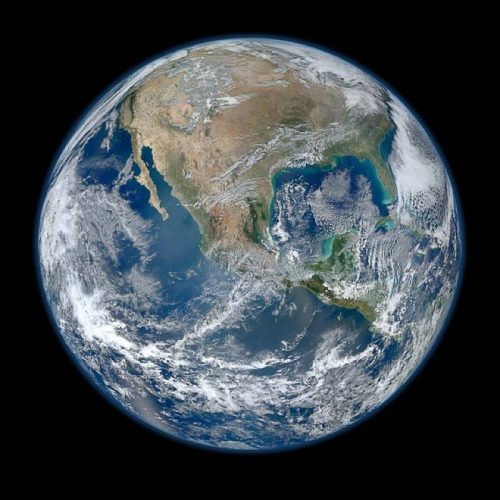
    Happy Earth Day from The Freckled Farm Soap Company

    At The Freckled Farm Soap Company we are committed to making the most earth conscious decisions possible for our farm and business. Our oils are organic and from certified sustainable sources. The vast majority of the packaging for our products is made with recycled materials and/or is compostable. Our products are safer for the water system than their commercial counterparts. The grain for our goats is sourced from a local farm. The hay we feed them is also local and is spray free (this essentially means organic but lacks the certification). Our barn is solar powered and we hope to eventually move our entire operation to solar. These options are not the cheapest or the easiest, but taking care of the world around us and offering a product that gives our customers a more eco-friendly option is incredibly important to us. Happy Earth Day everyone!

  • Sustainable Palm Oil and Our Goat Milk Soap

    Palm Oil is a very controversial ingredient. It is an edible oil that derives from the palm fruit, grown on the African Oil Palm Tree. Oil palms originated in Africa, but now can be found in all warm weather climates around the world. This oil is found in a very large percentage of the items we use everyday including food, soaps, shampoos, toothpaste, and cleaning agents. It is the second largest vegetable oil used world wide. Because of the wide spread use this industry contributes heavily to deforestation, habitat degradation, animal cruelty, as well as climate change.

    So why does the soap industry use palm oil? Well, this particular oil includes a hard to find form of vitamin E, tocopherol, and also has the ability to remove oil and dirt while protecting the natural oils of your skin and hair. It’s an important part of the soap making industry.

    Now for the good news… There is a way to continuing to use palm oil without harming the environment. At The Freckled Farm Soap Company we only use organic, sustainable, palm oil. This means our palm oil is ethically farmed with organic practices. Our oil supplier has produced to us a certificate stating their product comes from a sustainable source that meets the rigorous requirements set forth by the RSPO. These requirements ensure that the land, animal inhabitants, as well the indigenous people who work the land are treated fairly, and ethically, while carrying out ecologically safe farming practices. This allows you to take advantage of the benefits of this oil without worry that you are contributing to harming the environment and actually contributes to helping ensure these practices become more common.

  • Our Goat Milk Soaps are Going Organic!

    That’s right! Towards the end of last year, when trying to figure out how we were going to promote further growth and continue to make our goat milk soaps better for our customers and the environment, we decided to take the leap and switch over to nearly all organic oils!

    We now will only have two oils within our soaps that are not organic, both of which are among the lesser oils we use in our soap recipes and neither of these oils are used at all in our Castile Goat Milk Soap. So lets talk numbers. That means 88% of the oil portion of the recipe for the vast majority of our soaps is now organic and the oil portion of our Castile Goat Milk Soap is 100% organic.

    All that’s left is the goat milk. Our farm is not certified organic, because it is a costly certification to obtain and maintain, however we implement every organic practice we can. Our all-natural non-gmo feed comes from a local farm and our hay, also from a local farm, is chemical free. Like us, both of these farms have not gone through the organic certification process, but employ organic practices. We avoid all chemical pesticides on our farm, even in the areas where the goats are not allowed to roam. We implement as many natural remedies for ailments as we can, and when medications are required we exceed the recommended milk withdrawal time. You can feel confident that our milk is of the highest quality!

    What’s the best part of all of this? You are getting access to soap that is now   even better for you and the environment than before and the prices will remain the same! You heard right! We will not raise our prices with this change to our soap line. Enjoy!

  • Stop worrying about labels… Get to know your farmer!

    I love organic. Most of the food we purchase from the store is organic, but when it comes to purchasing locally you might not see the word “organic” as much as you would like. I strongly believe it’s important for us avoid ingesting chemicals unnecessarily and it’s incredibly important for the environment and beneficial bugs, but becoming certified to sell organic is very expensive to get into and then maintain, so for small farms, ones that aren’t producing on a very large scale, this might not be possible or economical and you can’t use the word “organic” unless you have been certified or sell under $5,000 worth of product a year. Does this mean that you should pass them up because they don’t have that “organic” label? Does this mean their product isn’t as good? Of course not!!

    In stores these labels are the only way farmers or producers can communicate with their customers, but with farmers markets we have the unique opportunity to speak directly to the farmers or producer. Our family basically lives at farmer’s markets. We sell at 5 a week through the busy season! We, ourselves are farmers, and we spend most of our time around other farmers, and I think one of the things I have learned the most from my experience is trusting and knowing your farmers is so much more important than a label. We have all become too reliant on a seal/word. When you buy locally you have the chance to interact directly with the person growing and making your food, your soap, your knitted items, etc. You can ask them about their practices. You can even visit their farm and see where their product is coming from! You can see how the animals are raised, you can see the condition of the gardens or fields, you can see where things are stored… There is transparency. Isn’t that what we are screaming for with our labels – no gmo, organic, free range, etc? We want to know about the farming practices. We want transparency.

    We are a small dairy goat farm. It would not make sense for us to go through the process of becoming organic at this point in time, but we run our farm as organically as possible. We do not use chemicals on our garden or pasture. We use natural fertilizers (compost and manure). Our feed comes from a small local farm who makes all natural non-GMO feed, our hay is chemical free. We use medications only when it is 100% necessary for the health of the animal and then we go through a longer than suggested milk withdrawal period. Our goats are spoiled and loved. We welcome customers to our farm (many of our customers know our goats by name) and love showing off our hard work. We talk about our processes and the materials that go into our soaps. We do whatever we can to provide the best product possible. When we are working directly with our customers that extra expense seems so unnecessary. Especially since that expense would just be passed on to those customers.

    We have many farm friends who are producing “organic” produce (organic in every way but not certified). They are on their hands and knees in the fields fighting bad bugs and doing what they can to attract good bugs. They know their soil and only use natural fertilizers. They work hard to give their customers healthy, chemical free produce.

    We have friends who raise meat animals that spend their days on pastures, in green grass, and under the sun. That eat non-gmo feeds. They also spoil their animals and love them. They also want to provide their customers with the best product they possibly can.

    Are any of these farmers “less than” because they don’t come with a label on their products? Are they not trustworthy? No… I believe the organic movement is incredibly important, its good for us as humans and our environment, but the local movement is what needs our focus. Transparency is important and transparency can be achieved without labels. Shop local… Know your farmer!