Tag: llamas

  • Fun Farm Facts Friday – October 30th

    Have you ever heard people talking about farm animals and been confused about the terminology they were using? With this week’s farm fact I’m here to help! Below you will find several terms used when describing the farm animals that we have. These are terms that you might see pop up from time to time on our blog.

    Goats:

    • Kid – Baby goat
    • Doe – Female goat
    • Doeling – A young female goat, generally under a year
    • Buck – Male goat
    • Buckling – Baby male goat, generally under a year
    • Wether – Castrated male
    • Billy – Older intact male
    • Dam – Mother goat
    • Sire – Father goat

    Chickens:

    • Chick – Baby chicken
    • Pullet – Female chicken until they are old enough to lay eggs
    • Hen – Female chicken of laying age
    • Rooster – Male chicken (also called cock or cockerel)

    Llamas:

    • Cria – Baby llama
    • Maiden – Female llama who has not been bred yet
    • Yearling – One year old llama
    • Dam – Mother goat
    • Sire – Father goat
  • Fun Farm Facts Friday – October 16th

    A few months ago I posted a fact about the 5 month gestation of goats. Well, this gestation is incredibly short compared to llamas. The length of a llama’s pregnancy is 11.5 months and ends with a single baby!! I can’t even imagine a pregnancy this long!

  • Fun Farm Facts Friday… September 25th

    With all of these facts about goat breeding I thought it would be nice to have a fact about llama breeding… even though both of our llamas are gelded (castrated) males.

    Llamas do not have cycles. They are induced ovulators! Ovulation usually occurs 24-36 hours after they are bred! Generally females are first bred at 14-18 months of age.

  • How the rest of our animals eat

    Back in May I wrote a post about what we feed our goats (here). Since the products that come off of our farm come from the milk that our goats supply we felt that it was important that our customers have an insight to the quality of our milk. The health of our animals is #1 to us so I thought our readers might also be interested in how the rest of the animals on The Freckled Farm are fed.

    Llamas

    Our llamas are strictly grass fed. They spend their days eating grass from the two pastures, munching on blackberry brambles and evergreen trees, and eating mountains of hay. During the winter we are literally stuffing the hay feeders all day. Because we do not give our llamas grain the quality of the hay is incredibly important. It is what keeps the weight on them, so the hay has to be nutrient rich. I have talked about the quality of our hay before. It’s something that we take very seriously. Most farmers that grow hay are small and only produce it for a small number of farms, so they do not want to go through the process and cost to be certified organic. The hay we use, however, is as close to organic as we can get! It’s chemical free and the farmer never uses drying agents. Good quality hay is one of the most important (and largest) purchases we make each year for our farm.

    Chickens

    Chickens eat everything. I’ve said it time and time again… chickens are not vegetarians like many big name chicken farmers would like you to believe. We feed our chickens a wide diet filled with proteins, veggies and greens, and grains. Our Chickens get a non-gmo grain and whatever food scraps that come out of our kitchen or garden. Our chickens also pick up lots of greens and bugs while they free range around the farm. You can tell if your chicken is getting a balanced diet by the color of their yolk, and our girls have bright orange yolks. I wrote an article about that as well (here).

    On The Freckled Farm the health of our animals is incredibly important to us. We do everything we can to make sure all of our animals have a well-rounded, nutrient-rich diet.

  • Fun Farm Fact Friday… August 28th

    Have you ever wondered what farms do with all of the manure that their animals produce? Here on The Freckled Farm we use it for our compost and garden. Both goat and llama fecal matter has little to no odor and both can be added directly to your garden without having to be composted. It acts as an amazing fertilizer! It’s a great organic way to give your plants a boost.

  • Fun Farm Fact Friday… July 31st

    Given that we are now in the dog days of summer I felt like it was a good time for this fact about llamas…

    We discussed before how llamas are in the same family as camels, so they share many similarities. Like camels, llamas can survive for weeks without water because they can collect water from the food they eat. I have also witnessed our llamas suck up a half a bucket of water in one sitting on a hot day!

  • Fun Farm Fact Friday… July 24th

    Did you know that llamas are not actually hoofed animals? On each foot they have two toenails and on the bottom they have a leathery pad. This hoof structure makes them very sure footed. It allows them to have better sensation on the bottom of their feet and gives them better contact with the ground.

  • Keeping predators out of your fencing

    Here at The Freckled Farm we have a tendency to go a little overboard in our planning of new projects. One example of this is our fencing. Most farms we have been to or visited use a pretty standard field fence for their pastures and their pens and smaller areas meant to separate kids, etc, are frequently made from wood or cattle panels. While we were researching what type of fencing we were using we were concerned with two things, predators and escapees. Goats are notorious escape artists so we wanted to make sure they would stay IN our fence, and stay safe.

    We chose a 5’ no-climb horse fence. This pretty much guarantees that our goats are staying put. Of course we still have to be careful not to put anything they could climb close to the fence. So that takes care of one of our two things, now on to the predators.

    In our area we have several predators to worry about when it comes to our goats. Coyotes, Bears, and more commonly, wandering dogs, can all be dangerous to your herd. On top of that we recently learned there is a mountain lion nearby.

    With 5-foot fencing we have a good deterrent. It is a high-tensile fence with posts every 8-10 feet so it would also be pretty tough to push or pull down. This should stop most dogs. Bears are unlikely to be motivated enough to do much here, etc. A fence though is not enough to protect your herd. Coyotes especially can jump a 5-foot fence with ease. I’m sure a mountain lion could do the same, if not scale the posts. So the best thing the fence really does is keep the herd in place, and keep predators from casually wandering into a meal.

    Electric fencing in addition to a good high-tensile barrier fence can go a long way to stop any would be attackers. You want to make sure you have an electric wire low, to prevent digging, but also one high to prevent jumping over the fence.

    After your fencing is in place you should really have a good guard animal. A guard can not only warn the herd of danger, they can fight off an attacker. Many people use dogs to achieve this, we use llamas. They are highly territorial and have the added benefit of eating what the goats do, which saves us money.

    Ultimately the best defense is a good offense. Take the steps necessary not to attract predators to your area. Make sure your animals have a guard animal. Keep them from wandering with a good strong fence that they cannot climb. In the end you should have at least a two-stage system. Keep predators out, but if they get in make sure they meet up with an aggressive foe standing between them an a free meal.
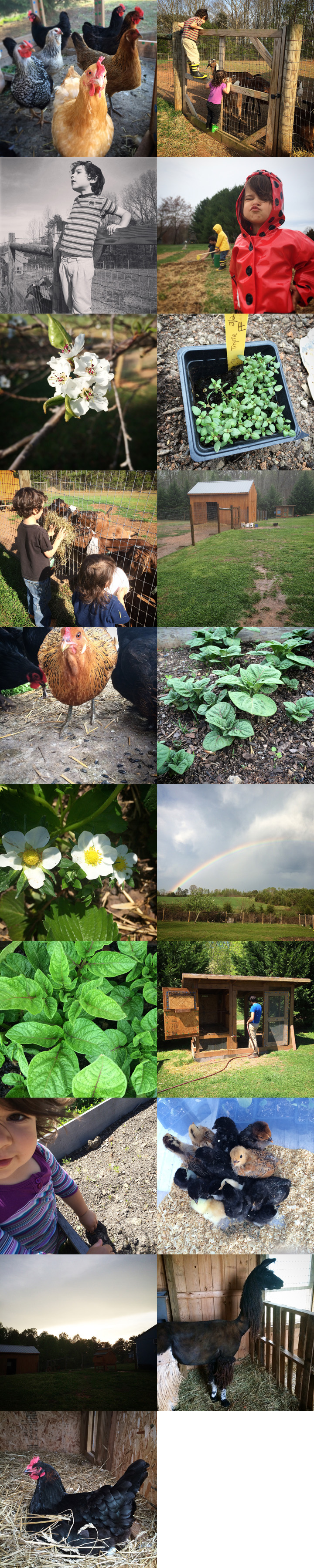

  • April’s “Other” Pictures

    So, I am getting these posted a little late this month. What can I say… It’s the start of the busy season. Here are the “other” pictures (the photographs that weren’t the “picture of the day” from our 365 project, but were still posted to our Instagram during the month of April). To follow the images from the farm in real time follow us on Instagram @Thefreckledfarm

    April Other pictures - The Freckled Farm Soap Company

  • Llama Shearing

    Every year, when the temperatures start to climb, we shear our guard llamas Afton and Blue Ridge. This keeps them cool during the dog days of summer. Since we do not have the equipment required to do the shearing ourselves the owners of Westerham Farm, where we purchased our llamas, come out each year to do it for us. We always enjoy seeing them, and having them see the boys!

    The pictures below are from our very first shearing in 2013!

    2013 llama shearing