Tag: Chickens

  • Beating the Heat on the Farm

    One of the biggest concerns during the summer is keeping animals safe in the heat. The last two summers here in Virginia we have had days that have exceeded 100 degrees and the humidity level soars all summer long. I have compiled a list below of how we keep our animals comfortable on The Freckled Farm
    Beating the Heat on the Farm

    All Animals

    1. Water  – All animals require clean fresh water year round, but during the summer the water will get warm and gross quickly. I will refresh the waterers at least twice a day. I try to keep the water as cool as possible. We also have more than one water bucket.
    2. Shelter – We make sure all of our animals have adequate  shelter to escape the sun
    3. Shade – At any point during the day there is shade somewhere in the pasture. This allows the animals to be outside and graze without having to be in the heat of the direct sun. Our coop was build in the shade of white pines, and our dogs have a labyrinth of bushes to hide in.

    Chickens

    1. Frozen or Cold Treats – Last summer was much hotter than any weather we have had to contend with this summer. The poor chickens were suffering. I would freeze fruits and veggies as treats. It kept them occupied and cool.
    2. Avoiding Starchy Foods – Starchy foods raise the chickens’ (or anyone else for that matter) blood sugar which in turn raises their body temperature. During hot days I avoid giving them bread items, and corn and grain products. On days like this they generally only get their chicken feed, fruits and veggies, and very small amount of black oil sunflower seeds.
    3. Dust Bath – We make sure the chickens have dust bath areas.

    Llamas

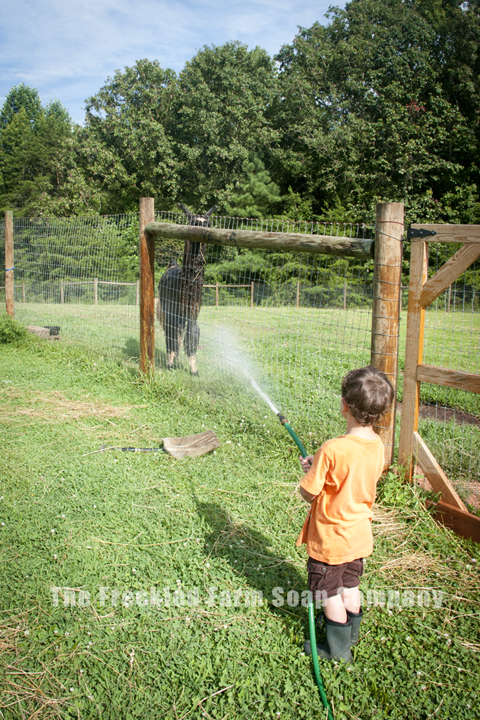
    1. Hose Down – One of our llamas in particular (Blue) LOVES to be hosed down. He suffers from the heat far more than our other llama. This is likely because he is black while Afton is cream colored. As soon as he hears the water he is a up against the fence asking to be sprayed. He will stand in the water stream for 10 minutes if you let him. On hot days I check him several times a day and I will hose him down if he is showing signs of being too hot.
    2. Dust Bath – Like the chickens the llamas like to roll around in the dirt. Right in the center of our pasture you will find a large bare spot where the llamas have rubbed away all the grass.

    Goats

    We don’t do much extra for the goats. They are not fans of being hosed down and I’ve never really seen them rolling around in the dirt like the llamas. We just make sure they have cool fresh water and a place to get out of the sun. Of all the animals on the farm they seem to handle the heat the best.

    During the summer please make sure you take extra care to make sure your animals are safe and comfortable. Keep and eye on the weather and watch for signs like labored breathing, lethargy, and loss of appetite.
  • Dealing with a Death on the Farm

    On August 1st, the day our blog went live, we lost our sweet Blanche, the family’s favorite chicken. She was a sweet bird who would follow my son around the yard. She was very social and far more interested in interacting with the humans on the farm than the other chickens. Breckin loved her very much. I don’t think he has meet someone in the last year that he hasn’t told about Blanche and how she lays green eggs.

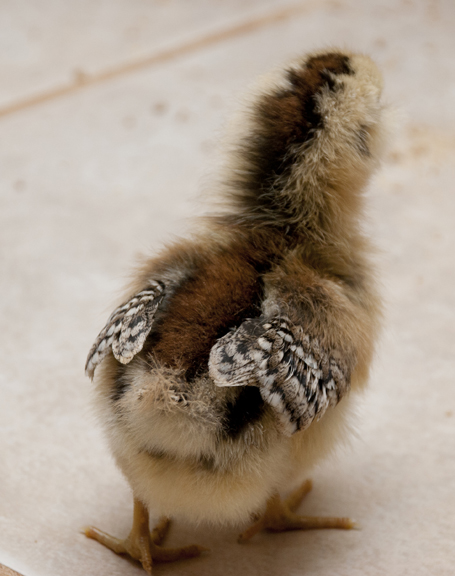
    Chick

    On Monday July 29th, when I was putting the chickens in the coop for the night, I noticed Blanche was missing. We called her and looked all over the farm. Finally she came out and slowly strutted across the yard. She meandered along, pecking at the ground. I didn’t think there was anything wrong with this, maybe she just didn’t want to go in the coop, so I picked her up and put her in myself. On Tuesday I had a meeting and Kevin did the evening farm chores, and he didn’t notice anything wrong with her either. Finally on Wednesday, I went to let the chickens out of their coop for their yard time and Blanche didn’t seem interested. I went about my chores, but was curious why our shadow was deciding to stay away, so I went to check on her closer. She was sitting next to the water. I scooted her out of the coop and she immediately hopped back in and returned to her spot. I looked around and noticed a bloody stool. Blanche then stood up and pooped another bloody stool. I had an idea of what could have been wrong, but since I had never actually run into this I ran inside and checked the web to see what it was and how to make her better. Of course it came back cocci and I called Kevin to ask him to pick up Corrid. We treated her, and the rest of the flock, as soon as Kevin came home. The next morning Blanche was gone and we were faced with the first loss on our farm.

    Building of The Freckled Farm

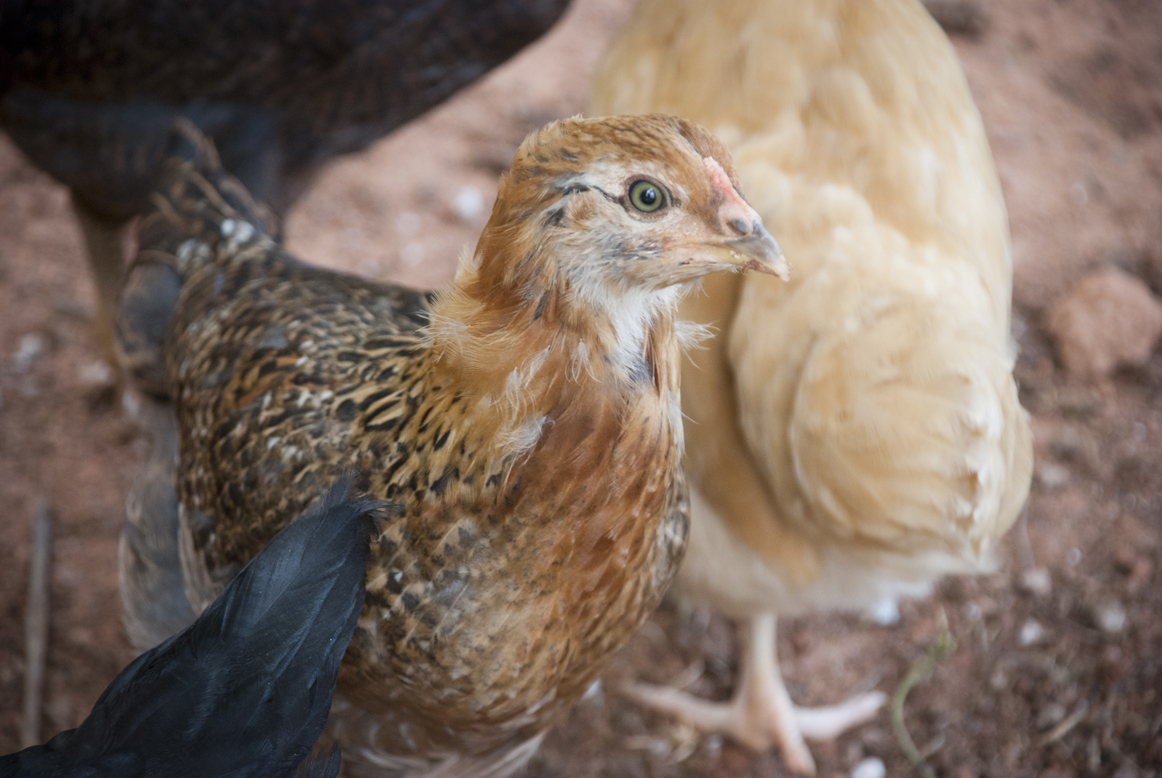
    (Unfortunately this is the most recent picture of Blanche that I can find. It was from a year ago and she about 16 weeks old)

    Finding out we lost Blanche hit me much harder than I would have expected. I am extremely sensitive and love my animals very much, so I guess it shouldn’t have come as a surprise. Beyond dealing the loss of a beloved member of our farm I was beating myself up quite badly. What had I done wrong? I should have been able to avoid this. What does this say about the state of our farm? It was all my fault. I spent every free second searching the web trying to get any advice I could on how to keep from losing our other chickens and how I could avoid this in the future. I was amazed to find that all of the farms that I follow and admire have dealt with this before. This is very common, especially when you have had a warm, humid, wet summer like we have had. We have rarely had a day pass that didn’t include some amount of rain. I started to let go of the feeling that I had done something horrible. I keep my farm clean and organized. I clean waterers daily, etc. I thought I was doing what I could to avoid a problem like this, but you can’t account for everything. Cocci can be brought on someone’s shoe, or from a wild bird, it could have come from anywhere, and our current conditions were unfortunately breeding the parasite.

    I spent the next few days talking to my other friends who own farms. I beat myself up for being a “bad farmer.” I shouldn’t be grieving a loss this hard. What was going to happen when we decided to raise meat animals for our family’s meat needs? I found that my reaction was not uncommon. She wasn’t a meat chicken. She was loved laying hen, who my son had very closely connected to. Why shouldn’t I mourn her? And realistically why shouldn’t I mourn our meat animals. Maybe it wont be on the same level… they wont have names, we wont spend the same amount of time with them, and they wont live with us nearly as long, but don’t they deserve to be cared for too? Isn’t that why you homestead? To have a better quality of life for you, your family, and the animals who provide for you?

    Now we are forced to decide when to replace and add another chicken or chickens to our farm. When a dog or cat dies you wait a long period of time to get a new pet. You allow yourself time to mourn, but on a farm when you can’t just go without. The chickens we had weren’t producing enough for us already and we had discussed getting more. We were easily going through 2 dozen eggs a week and could go through more if more were available, and then we lost one of our best layers. It feels wrong to “replace” her so soon, but it’s not something we can go without. Eggs are our main breakfast.

    So maybe I will always mourn the loss of an animal, because I will always love my animals, but maybe I needed to get over the guilt of replacing them. Maybe loving my animals makes me a good farmer, even if that means it hurts like hell when they pass.