We have another chicken/egg fact today!
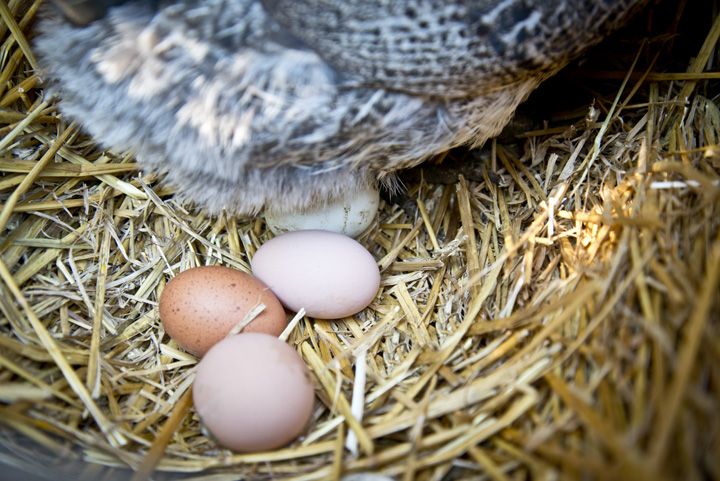
When collecting eggs for the day it is very easy to tell which eggs were laid most recently because a freshly laid egg is 105 fahrenheit! That’s one hot egg!
We have another chicken/egg fact today!
When collecting eggs for the day it is very easy to tell which eggs were laid most recently because a freshly laid egg is 105 fahrenheit! That’s one hot egg!
It takes a fertilized egg being held at 88 degrees (incubation with a broody hen or a incubator) for an extended period of time for an embro to start forming, and 21 days at this temperature for a chick to hatch. Since farmers collect eggs daily it is highly unlikely that you will ever notice a difference between fertilized and non-fertilized eggs as a consumer.
Many people think that it is necessary to have a rooster with your hens in order to get eggs, but this isn’t true. Hens will lay with or without a rooster. Chickens lay eggs the same way humans ovulate, however instead of releasing one egg a month like humans do they release an egg daily to every few days.
If you are a farmer or even just have a backyard chicken flock you understand the importance, and the satisfaction, of getting a dark egg yolk from your chicken! It’s an indication that your chickens are getting a healthy, nutrient rich diet. If your chicken has a healthy diet then they are transferring those nutrients to their eggs! Everyone benefits!
There are three nutrients that factor into the egg yolk coloring – Proteins, xanthophylls, and omega-3 fatty acids. All of these nutrients can be found naturally and if you are able to pasture your chickens they will pick up everything they need nutritionally and their yolks will be bright orange on their own without any supplementing. If your chickens live in a coop and do not get a lot of yard time there are ways of supplementing these nutrients so you too can get the dark egg yolks!
It always drives me crazy when I see “vegetarian feed” on chicken meat or eggs at the grocery store. Chickens are not vegetarians. They are omnivores. They love and need meat! Bugs, mealworms, frogs, lizards, and even rodents. Letting your chickens have run of a pasture should give them all the protein they need, since they will spend their day chasing and eating bugs. If you need to supplement you can give them dried mealworms, black oil sunflower seeds, cooked meats, and cooked eggs. It’s a daily ritual for us to give our chickens black oil sunflower seeds when we are putting them up for the night. It makes it easier to get them into the coop and gives them an extra shot of protein, especially during the winter when there aren’t a lot of bugs out.
Xanthophylls play a large role in getting you those dark egg yolks. They can be found in plants like leafy greens, broccoli, collards, kale, and brussels sprouts. In the winter when greens are not always readily available you may notice that the yolks become a paler. Giving your chicken your veggie scraps and/or growing extra greens for them in your garden will help supplement their diet. Dandelion greens are also a great source of xanthophylls. During the spring and summer I have the kids pick the dandelions out of the yard and throw them in the coop. The chickens love them!
If you are looking to supplement Omega-3 Fatty Acids flax seeds and sea kelp will give the chickens what they need.
Making sure your chicken has a well rounded, nutrient rich diet is easy to do and will benefit everyone and once you start getting the dark orange yolks it’s hard to imagine eating eggs that don’t… It makes you an egg snob!
What goes into a dozen eggs? We learned earlier in the year that it takes 14 hours of sunlight for a chicken to make a single egg, but more than sunlight is needed… in fact it takes 4 pounds of feed to make one dozen eggs!
So far this year all of the fun farm facts have been goat related, so I thought it was time to do a fact about one of our other farm animals. Today’s fact is about chickens!
Chickens are born with all of the eggs they will lay in their lifetime. The rate in which they lay eggs depend on the time of year. Chickens need a minimum of 14 hours of sunlight to lay an egg, so during the shorter, colder days chickens lay less eggs. Some farmers will light their hen houses in order to encourage chickens to lay more during the winter months, however this does not cause them to lay more eggs in their lifetime, it will only cause them to go through their egg supply quicker. While there is nothing wrong with this practice, it is not something we choose to do. We like our girls to have a break over the winter months.